
New Project: Pastoral Resilience and Sense of Place in Uganda (PreSense)
A new project funded by the Danida Fellowship Centre (DFC) brings together partners from University College Copenhagen, Gulu University, Karamoja – Herders of the Horn, and the Copenhagen Centre for Disaster Research (COPE) at the University of Copenhagen.
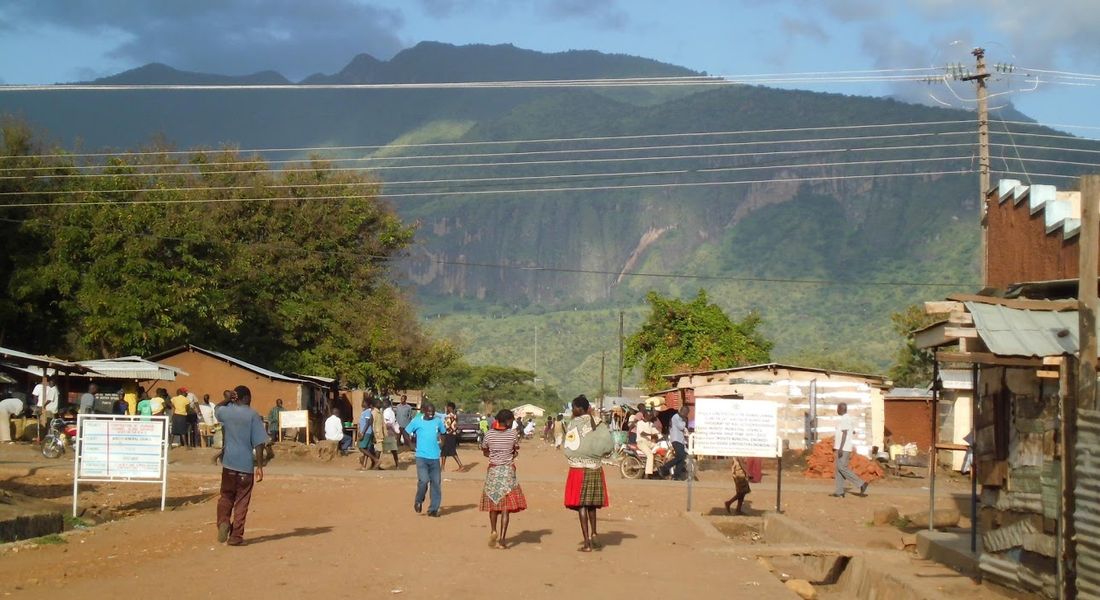
The team will spend the next 5 years investigating the question: How does sense of place among pastoralists in Karamoja, Uganda, affect climate change adaptation practices, and how can this knowledge contribute to reducing maladaptive practices and enhancing resilience?
The project will kick off in 2026, the year declared as the International Year of Rangelands and Pastoralists by the United Nations. Pastoralism is a livelihood system based on livestock mobility for grazing and water resources and is long recognised as the most resilient livelihood systems in dryland environments with high variability in rainfall patterns. The Karamojong of Uganda are a pastoral people, who has lived with their environment and climate by engaging in livestock mobility supplemented by other livelihood options.
However, some scientists, policymakers, humanitarian actors, etc. now claim that climate change will be the end of pastoralism. It is argued that the magnitude of climate change effects is now too challenging for the resilience of the pastoral livelihoods. And, indeed, there has been an increase in the use of maladaptive practices in Karamoja in recent decades, such as deforestation for charcoal burning and timber sales.
This project will illuminate the dynamics of climate adaptative practice and maladaptive ones and understand them in a broader perspective. We propose that the challenges to pastoralism’s climate adaptative practices are predominantly political and structural, rather than climatic and environmental. The Karamojong have long been marginalised within national policy frameworks, and their mobility has been constrained. Political and structural challenges can be overcome with a grounded understanding supporting the policies.
Even under increasing climatic uncertainty, we see pastoralists continuing to cope and adapt. They are adjusting herd composition, rethinking crop choices, diversifying livelihoods, and maintaining mobility as a key strategy. To understand both adaptive and maladaptive practices, we argue that it is essential to situate climate change within the wider social, political, and economic environments in which pastoralist decisions are made.
This is where sense of place becomes central to our approach, as it allows us to explore how relationships to land, movement, and belonging influence climate adaptation practices:
PreSense aims to contribute knowledge in three main ways:
- First, we seek to advance a holistic understanding of climate adaptation that moves beyond instrumental or purely risk-based models.
- Second, we aim to contribute to the decolonisation of dominant narratives about pastoralism that continue to inform policies and interventions poorly aligned with lived realities.
- Third, we push conceptual boundaries by applying sense of place to mobile, non-sedentary ways of life, thereby advancing new thinking within climate change adaptation research.
Topics
Contact
The project is led by Marianne Mosebo
mmos@kp.dk