
Natural Hazards fellowship visit extends to COPE student supervision
Meet Dr Gabi Mocatta from the University of Tasmania in Australia, who visited COPE as part of a research fellowship funded by Natural Hazards Research Australia (NHRA).
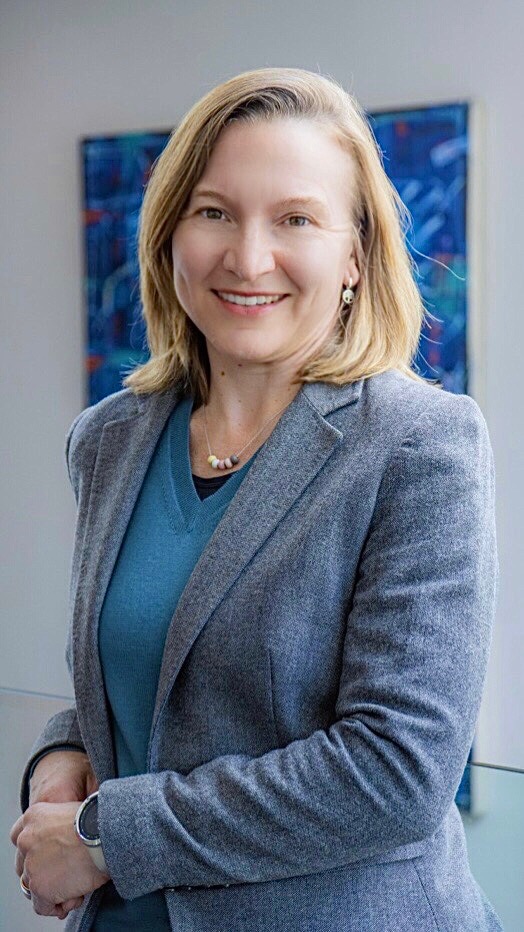
In November 2025, Dr Gabi Mocatta from the University of Tasmania in Australia visited COPE as part of a research fellowship funded by Natural Hazards Research Australia (NHRA). This is Australia’s national research centre for natural hazards resilience and disaster risk reduction, and Gabi was awarded the competitive fellowship as a career incubator initiative. The fellowship allowed her to spend time at COPE and the Department of Psychology at the University of Copenhagen. The visit also led to a research supervision at COPE, completed in June 2026. Here, Gabi talks about her work, the fellowship visit, and the interdisciplinary supervision with COPE.
Tell us about your research:
I am a climate social scientist: an interdisciplinary academic who researches social responses to climate change and climate-driven hazards. My work looks broadly at the role of communication and the building of literacies around climate change, climate risk and extreme weather events. I’m interested in “what works” in terms of building communities’ hazard awareness and disaster preparedness in the context of climate change. Coming from Australia, where we have huge climate variability overlaid by climate change impacts, this is a particularly urgent question. Answers are needed to save lives and livelihoods.
Why COPE and UCPH?
I was drawn to UCPH for this NHRA fellowship for two reasons, so my time was split between centers at UCPH. Firstly, I was keen to have the opportunity to visit COPE and learn from experts about disaster response and climate preparedness in a Nordic context. I am interested in polycentric disaster governance; especially how communities can respond to extreme weather events with strength when in relationships of trust and reciprocal communication with emergency response agencies. Also, I was keen to learn from COPE experts like Emannuel Raju about the work of the World Weather Attribution project, which brings rapid attribution to the study of extreme weather disasters. Secondly, I have an interest in immersive media (virtual and extended reality) for communicating about climate-driven hazards, and the fellowship also allowed me to visit and work with Guido Makransky at the UCPH School of Psychology, to learn about his team’s research on the nature of learning through immersive media. It was a really fascinating and productive visit, offering two quite different, but of course connected, strands of research insights.
How have you taken this back to Australia?
I’m keen to share my learnings with people who work in this field. I’ve been invited to present at a couple of upcoming conferences this year, and I have journal articles underway. In August 2026, I’ll be presenting at the Australasian Fire and Emergency Service Authorities Council conference in Melbourne on learnings from the UCPH visit, and in October I’ll be speaking at Climate Adaptation 2026, Australia’s national adaptation conference. I’m also preparing a couple of papers about immersive media in climate-driven hazards communication and engagement, and Nordic disaster response and governance from an Australian perspective. I think this kind of international sharing is vital in the field. Conversations with Emmanuel Raju also inspired a major grant application to the Australian Research Council that I submitted earlier this year. This looks at climate attribution in Australian media coverage of extreme weather disasters -and how we might improve it. I have my fingers tightly crossed that this might get funded.
And the supervision?
I have had the pleasure of collaborating as external supervisor with COPE Master of Public Health student Lisa Gawes, and supervisor Peter Kjær Mackie Jensen. I was invited to assist in supervision as Lisa’s Master’s thesis had a media focus, looking at how media had framed emerging disease risk from the Asian tiger mosquito (Aedes albopictus) in newspapers in Germany, Austria and Switzerland. I’ve done a lot of media-based research in the past, and Peter is an expert in the public health and climate change aspects of this mosquito, so it was the perfect fit. Lisa found that media consistently framed the mosquito as a public health threat, with climate change and globalisation as the dominant causal attributions, however responsibility for the problem was rarely made explicit. The consistent gap between causal diagnosis and accountability for the problem that Lisa found, limits the capacity to generate public and institutional pressure that effective preparedness requires, representing – in the case of the mosquito – a serious a public health communication challenge. This is highly pertinent as I would argue that there is a similar accountability gap in media coverage of climate-driven hazards and disasters, which similarly limits preparedness, response and accountability. This is a risk communication and awareness issue that needs to be solved worldwide – and certainly in Australia. I really enjoyed this international supervision, and I am grateful to COPE for the opportunity. I look forward to future collaborations. Also, many congratulations to Lisa on the top result for her thesis!
Contact
If you have questions about Dr Gabi Mocatta’s research and visit to COPE, you can contact her at gabi.mocatta@utas.edu.au.