
Interview with Frances Rosenberg
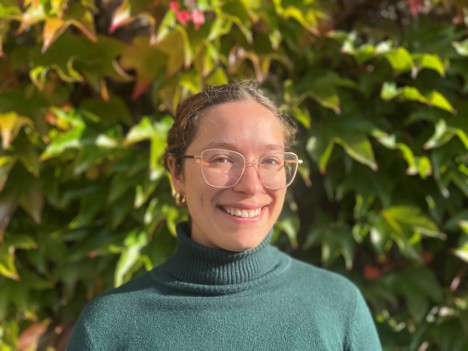
Frances Rosenberg has joined the Global Health section as a Research Assistant on the Convergence project “In the Heat of the Moment.” In this interview, she talks about why extreme heat is a governance and justice problem, and what it takes to work across disciplines that don’t always agree on what counts as evidence.
Could you share a little about your role on this project and what drew you to it?
I recently joined the Convergence grant project titled “In the Heat of the Moment: Mapping the Landscape of Extreme Heat” as a research assistant. The project is led by COPE team members, and the PI is Emmanuel Raju. Through this project, we’re working to figure out how heatwaves are actually defined around the world, what happens when heatwaves are classified as a disaster, and what happens when they aren’t. Does it matter? My role involves mapping global definitions: comparing disaster management agency information on heatwaves with meteorological and public health information.
What drew me in was this project's stance that heat isn't just a physiological or meteorological problem, but that it’s a governance problem, and a justice problem as well. That framing felt very familiar to me. Extreme heat is a "silent killer" partly because it's structurally invisible in exactly the way my earlier work looked at. The harm is real, but the systems meant to recognize and respond to it often aren't built to see it.
How does your previous work connect to this project?
More directly than I expected, actually. My MSc thesis, "Land Back, Health Back," examined how land sovereignty functions as a determinant of Indigenous health, which meant thinking hard about the gap between lived experience of harm and its formal recognition in law and policy. That's essentially the same gap this project is mapping for heat: the distance between the experience of extreme heat and its recognition as a disaster with the legal weight to trigger relief, insurance, or protection.
I also spent the past two years supporting the development of a curriculum on sustainability and climate change in global health at the University of Copenhagen—first as a research assistant doing the literature review and writing the official course description, then as a visiting researcher building out the full 7.5 ECTS course with Associate Professor Britt Pinkowski Tersbøl. That work forced me to become fluent in synthesizing across disciplines that don't naturally speak to each other. In some ways, it was like a sort of rehearsal for what this project needs, as it pulls data science, economics, global health, law, and political science together into one framework.
And through the Copenhagen Decolonization Collective, which I co-founded a year and a half ago with some really amazing people, I've spent a lot of time thinking about whose knowledge systems get treated as authoritative. This feels directly relevant to a project that’s explicitly looking toward the data injustice in heat research outside the Global North, and centering a to-be-determined country in Africa as a case study.
Like you said, the project spans data science, economics, global health, law, and political science. What's it like working across that many disciplines?
Honestly, it's the part of this work that I find most exciting, partly because it's not new territory for me. I studied for four undergraduate years at Bennington College in the US, where interdisciplinarity is written into the core foundation of the university, and each student comes up with their own unique plan of study based on a combination of disciplines that makes sense for them. Years later, building the sustainability and climate change curriculum here at KU meant sitting with public health scholars, anthropologists, climate scientists, and disaster risk experts and finding the throughlines between how each field frames the same problem. These experiences taught me a lot about translation. For instance, not flattening a legal framework into health language, or vice versa, but learning enough of each discipline's internal logic to see where they actually converge.
The hard part, and the interesting part, is that these disciplines don't just use different vocabularies, they disagree about what counts as evidence in the first place. A meteorological definition of a heatwave and a legal definition of a disaster are doing fundamentally different work and reconciling them means constantly asking what gets lost in translation between a climate dataset, a health outcome, and a policy trigger. It's slow, sometimes frustrating work, but it's also where I think the most useful insights come from. The seams between disciplines are usually where the blind spots are hiding.
Looking ahead, what are you most excited about in the next stages of the project?
I'm especially looking forward to the future qualitative field work in Africa, where the project will move from mapping definitions globally to a deeper look at health and socio-economic impacts in a city (to be determined) with an existing heat action plan. Given how much of my own background is in decolonial and community-engaged research, I'm excited to see how the project puts the data and law frameworks in dialogue with people actually living the gap between how heat is defined and how it's governed.
I'm also excited about the theoretical piece, as we build out a new understanding of how law integrates (or fails to integrate) scientific evidence in moments of political inaction. That's a question I've circled around before, in different forms, and I think this project has a real chance to shift how heat gets classified, and therefore protected against, well beyond the countries currently setting the terms of the conversation.
We are grateful to the UCPH Convergence grant, 2026, for funding our project.
Frances Rosenberg: frances.rosenberg@sund.ku.dk