
Nynke Schaap Interview: Adapting to Climate Change in Yemen
Read along as we explore how Nynke’s hands-on experience in the humanitarian sector inspired her to pursue a PhD focused on climate change adaptation in conflict-affected Yemen.
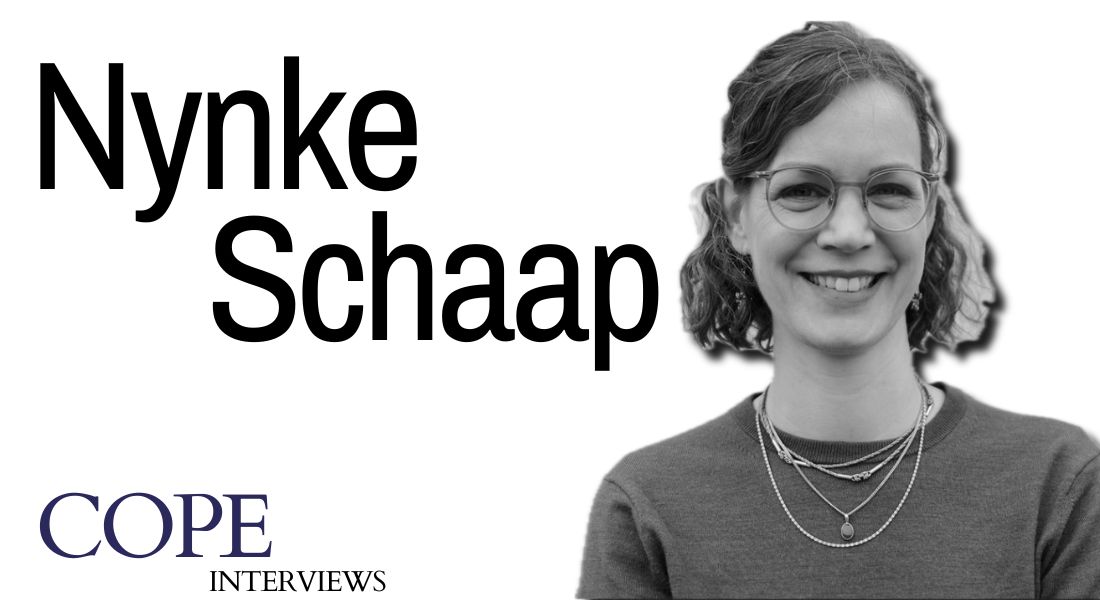
Could you share a little about your research and what drew you to this work?
My research, which I started September 2025, is about climate change adaptation by agricultural and pastoralist communities in conflict settings, with Yemen as the case study. In Yemen, as in other conflict or protracted crises settings, people have been facing threats to their lives and well-being due to the conflict and extreme weather events. These threats include food insecurity, and therefore the research focuses on climate change adaptation among farming communities.
Imagine farming vegetables through years of conflict; infrastructure such as irrigation channels have been damaged, fuel to pump water has become too expensive, a drive to the market for inputs has become unsafe and time-consuming due to check-points, the family members who used to take up the physically heavy work has lost their lives, and the crop yield is barely enough to provide food for the whole family. Governance is fractured, priorities have diverted and the people’s needs exceed by far what governance and humanitarian actors provide. Then climate change related droughts or floods destroy the next season's harvest and there is no food or income at all. This simplified vignette reflects why conflict and climate change are often referred to as a ‘double burden’. Humanitarian and development actors aim to address this in interventions promoting climate change adaptation for food security. However, while there is quite some research done on how climate change and conflict accelerate each other, there is little empirical knowledge on addressing climate change within a conflict context. The same factors that make farming difficult during conflict, may also hinder adaptation, for example.
Therefore, this research looks at the key drivers and dynamics of food (in)security and climate change adaptation in a conflict context, and how humanitarian interventions can better support farmer/pastoralist communities in this context.
My PhD is a collaboration between University of Copenhagen (UCPH) and the International Institute of Social Studies (ISS) in The Hague. The PhD is part of the larger project named “Community-Led Climate Change Adaptation and Food Security in Conflict Affected Yemen (CAFSCA)” led by the NGO - ADRA Denmark, in collaboration with ADRA Yemen. CAFSCA, besides its research component, also has a Community Action Planning component in to identify solutions for climate smart agriculture and pastoral practices. The PhD project is supervised by Emmanuel Raju (UCPH) and Rodrigo Mena (ISS). The project is funded by the Novo Nordisk Foundation.
What inspired you to focus on climate change and food security in a conflict-affected country like Yemen?
Before my PhD, I worked at an NGO that supports agricultural communities in addressing climate change in the context of conflict. As a practitioner, I struggled with what we were doing. I don’t think we didn’t do ‘well’. But I do think we would have benefitted from a more in-depth understanding of how conflict interacts with adaptation for food security. This goes for international NGOs, NGOs in the intervention countries, as well as donors. Adaptation to climate change, agriculture, food security, these things don’t happen in siloes, they are interconnected systems and affected by multiple dynamics.
One time for my previous job my colleagues and I went to meet farmers in Yemen to ask how they perceived the climate change intervention they had received from another NGO. They were enthusiastic about it as the intervention had indeed increased their produce. However, as the intervention solely focused on production and not on, for example, processing or access to markets, they at times had so many tomatoes they had to feed it to their cattle. It’s easy to judge this, but when my colleagues and I asked ourselves what we could do differently we ran into a lot of conflict-related challenges: people have run out of savings, cooperatives have fallen apart, benzine is too expensive, governance is fractured, human capital has gone lost, etc. We simply didn’t know what we could do within the budget and time our potential donor would give us. And to be honest, I don’t think anyone really knows. This is also confirmed by research, stating for example that: “environmental and development organizations have historically often designed and implemented environmental projects in the same ways in both conflict-affected contexts and those not affected by conflict.” (Ide et al., 2021, p.9). We have all those concepts: Do no harm, conflict-sensitivity, humanitarian-development-peace nexus, but what does it really mean? The farmers and pastoralists surely don’t care, they just want to overcome their vulnerabilities and be more resilient to climate change, extreme weather events, and conflict. I’m very excited that I have the chance now to deep dive into this topic, which includes spending more time with the farmers and pastoralists.
Ide, Tobias, Carl Bruch, Alexander Carius, et al. “The past and future (s) of environmental peacebuilding.” International Affairs 97, no. 1 (2021): 1–16.
You will be working closely with the NGO ADRA, including their team in Yemen. What value does this add?
This PhD touches upon a lot of concepts the humanitarian/development sector is struggling with – or at least I was when I was in the sector. To keep informed and guided by the challenges faced by the sector works as a reminder for my research to be ‘hands-on’ and co-produce knowledge that is useful for the sector and of course ultimately for the communities they support. At the same time, NGOs can be great gatekeepers and facilitators for meeting with communities and there is a lot to learn from and through them.
How do you hope this research will contribute to bigger conversations about climate change, and food security in conflict settings?
Climate change and conflict accelerate each other. Especially climate change as a risk multiplier for conflict has gotten a lot of attention in academic and other publications. A common example of this is pastoralists looking for grazing fields elsewhere due to climate change related droughts and then competing for the same natural resources with other users. Although such linkages are important and need to be understood and addressed, they do not help us understand the drivers and dynamics of climate change adaptation and food (in)security in conflict contexts. What adaptation measures are not only suitable from a technical point of view but do also fit the conflict contexts? This means looking at the conflict impacts on people, their vulnerability, but also at how conflict and adaptation interact.
In addition, I hope my research contributes to understanding and implementing a ‘community-led’ approach. ‘Community-led’ means different things but for the project team it means that the adaptation measures are initiated, chosen, designed and implemented by the farmers/pastoralists themselves and not led by outsiders. Accordingly, it also builds upon their knowledge, experience and values, and is suitable for their everyday lived experiences and needs. In the end, if NGOs are faithful to their own goals, they don’t want to be needed and intervene. Considering the continuous protracted crises, systematic challenges and funding cuts the world is facing, bottom-up approaches and agency continue to be important topics to learn on.
Looking ahead, what excites you most about the next stages of the project?
I’m excited to lay the puzzle of what we do know about operating in conflict settings, how conflict affects climate change adaptation et cetera, and linking it to what I will learn from communities on the specifics of their contexts, for example how they have been coping and adapting so far. It excites me to meet with, and learn from, Yemeni’s again, particularly women. Furthermore, I love sharing and exchanging on the topic, with my supervisors, ADRA Denmark, ADRA Yemen, but also others in the field, and by lecturing or participating in formal (panel) discussions. I guess I’m excited about almost every part of it!
Contact
Feel free to connect with our colleague Nynke, via email or on LinkedIn: