
A Continent of Innovation and Solutions: What the World Health Summit Regional Meeting Nairobi Said About Climate and Health
the health and climate crisis demands global action. Read Nick Baumgart’s take away.
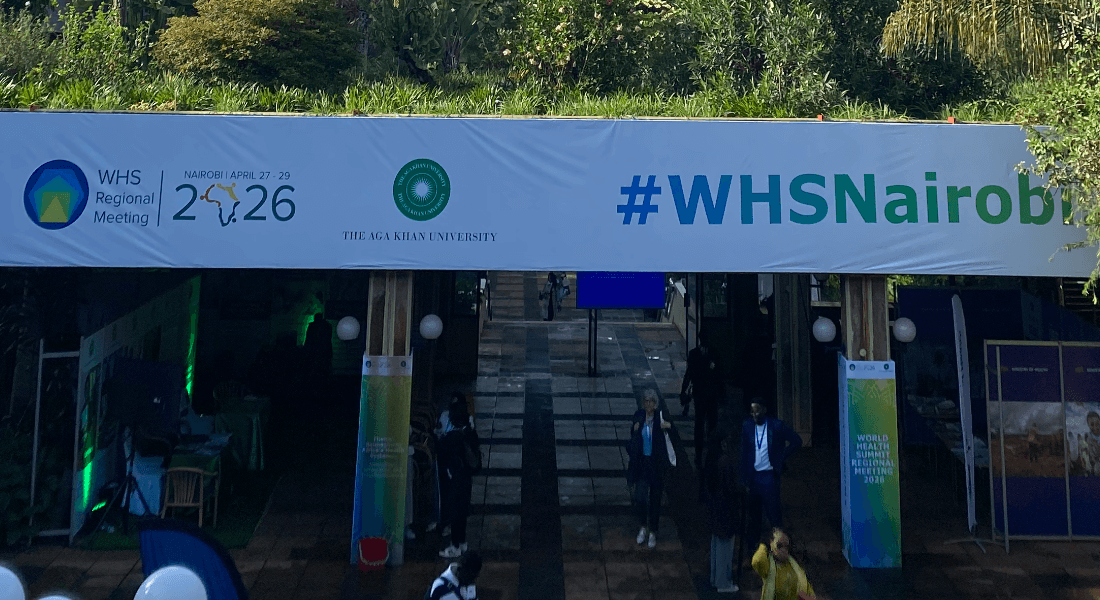
The World Health Summit (WHS) Regional Meeting in Nairobi in April 2026 made clear: Africa is on the frontline of a polycrisis it did little to create. Across the continent, the burden of chronic diseases is rising, patterns of infectious diseases are shifting, and health financing gaps are widening, all at once. As speakers were quick to highlight, these patterns are not accidental. They are structurally embedded in geopolitical realities and questions of power. Countries spend more servicing foreign debt than investing in their own health systems. Speakers highlighted that the annual health financing gap in sub-Saharan Africa alone stands at nearly $30 billion every year. Climate financing tells a similar story of imbalance: again, one speaker underlines that the ten most climate-vulnerable countries on the continent receive just 11% of available funds. It is those most vulnerable who are bearing the full force of climate change: floods destroying infrastructure and livelihoods, extreme heat overwhelming health facilities and driving cardiometabolic diseases, droughts fueling silent surges in malnutrition and child mortality. Together, these climate-related stressors drove more than half of all public health emergencies on the continent between 2001 and 2021.
To address these issues, the summit centered on “Reimagining Africa's Health Systems, with a focus on Innovation, Integration and Interdependence”.
While climate was not the headline theme of the event, it quickly became clear that climate change cuts across nearly all of them. So, what can we take away about the climate and health from the WHS?
The summit made unequivocally clear that Africa is a continent of innovation, change and solutions. To mention some: Zimbabwe is developing near real-time epidemiological surveillance of extreme heat and its impact on child and maternal health. In South Sudan, all-weather roads are ensuring healthcare access throughout the rainy season. Kenya, with its policy, is implementing climate adaptation of built environments. Apps like Carbonica help healthcare facilities reduce CO₂ emissions, and many more interventions, within and beyond the climate sphere, were highlighted throughout the week. And of course, it would not be 2026 without AI being presented as one of the most promising tools to solve health crises. While incredibly powerful, experts were clear: AI models are only ever as good as the data fed into them. Local data remains critically sparse across much of Africa, particularly for climate-related health impacts and even basic weather variables. Data also remains siloed and rarely shared across borders, even in the continent. Hence the consistent calls for south-to-south data-sharing arrangements that are co-created, shared, and owned by African researchers and communities, and to avoid the historical extractivism. And let's not underestimate the power of social innovation either: a simple buddy system for hospital staff to stay hydrated during periods of extreme heat can meaningfully improve both care quality and staff wellbeing. Moreover, the power of community knowledge, alongside data-driven models, was consistently highlighted as one of Africa's distinctive strengths. As one speaker powerfully put it, diseases start and end within communities. Even where data gaps exist, community knowledge can fill critical gaps. During COVID-19, a woman's lemon tree became an unlikely community based epidemiological tool: lemons were believed to cure symptoms, so people buying them were an early indicator of suspected cases.
Yet it also became painfully clear that health and climate are still too often treated as two separate disciplines and health has not penetrated mainstream climate change debates enough: As one speaker put it: if you are not at the table, you are on the menu to be eaten, and health is not yet fully present at the table in climate negotiations. One speaker highlighted that only 22 of 47 African states include health in their Nationally Determined Contributions, and health remains largely absent from loss and damage funds. The influence of health research on the IPCC also remains far too limited. While the second global stock take will begin in November 2026 and conclude in 2028, health advocates must start shaping it now. The coming months are critical for the African region, to leverage health research into major climate talks, starting with the UN climate meetings in Bonn in June 2026 and building toward COP32 in Ethiopia next year. This is a rare and time-bound opportunity to correct the narrative and ensure that the health of a young, dynamic, and resilient continent is written into the architecture of climate action - not left as a footnote.
Nick’s PhD is funded from the Climate Change Attribution and Vulnerability in Kenya” project with funding from the Ministry of Foreign Affairs, Denmark. (DFC File No. 23-12-KU).